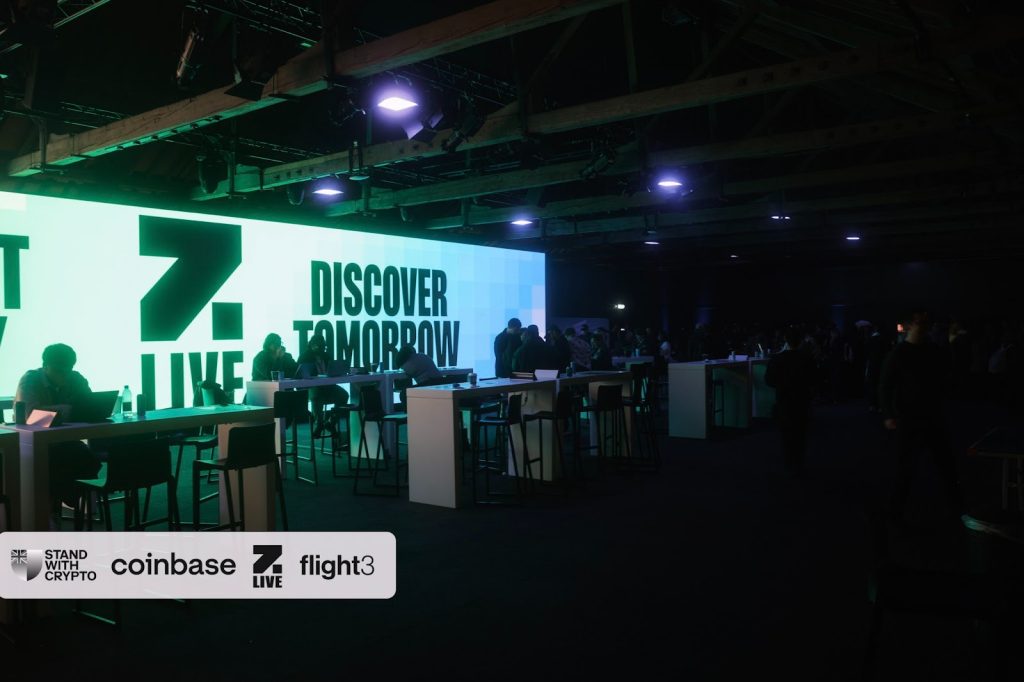
As a sponsor of Zebu Live 2025, VOLS looks to position itself at the United Kingdom’s premier Web3 summit.
This report offers a comprehensive analysis of the pivotal discussions and prevailing market sentiment observed throughout the two-day event. It focuses on key insights that validate VOLS’s strategic direction and illuminate immediate, actionable opportunities within the rapidly evolving institutional DeFi landscape.
Shifting Tides: From “If” to “How” in Institutional DeFi Adoption
The conclusion of Zebu Live 2025 underscored a profound shift in the collective consciousness of the Web3 community: the conversation has moved definitively from if institutions will adopt DeFi to how they will integrate it. The conference served as an overwhelming validation of VOLS’s strategic foresight, highlighting a robust and undeniable market demand for institutional-grade, compliant, and highly efficient on-chain infrastructure.
Recurring themes across all stages of the summit included:
- Maturation of Tokenisation: A particular emphasis was placed on Real World Assets (RWAs), signaling their readiness for broader institutional integration.
- Importance of Regulatory Clarity: The urgent need for well-defined regulatory frameworks, especially within the UK, was a constant refrain.
- Pragmatic Web3 Implementation: Discussions revolved around the practical steps required for seamless and effective adoption of Web3 services by traditional entities.
The prevailing discourse actively addressed the “degen vs. institutional” divide, firmly positioning platforms like VOLS as indispensable bridges connecting these two disparate worlds.
A Professional Atmosphere Focused on Sustainable Growth
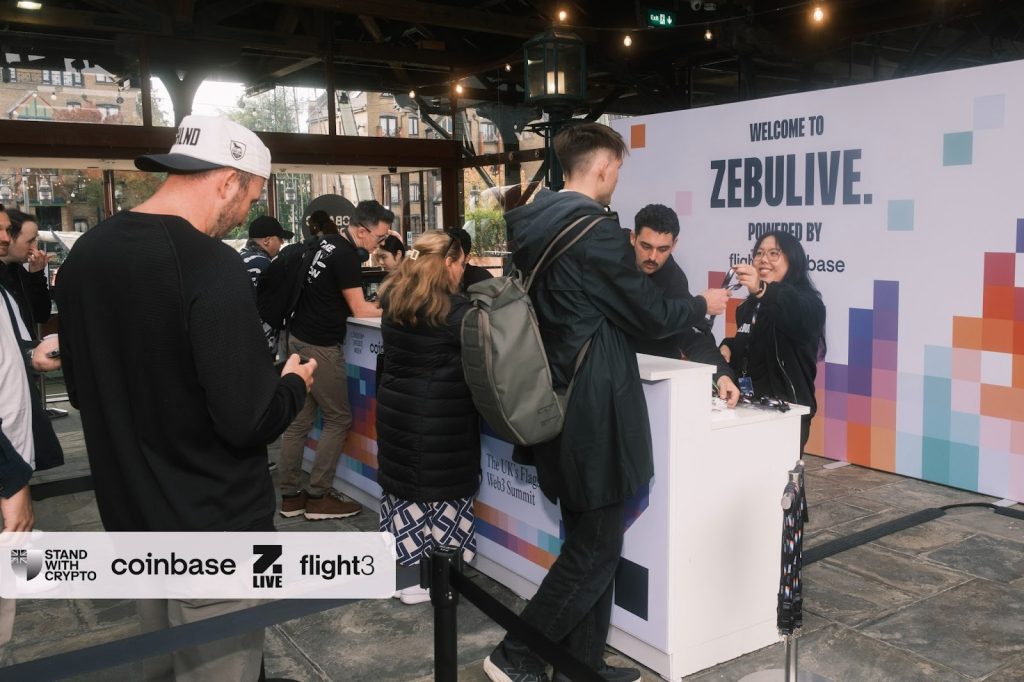
The atmosphere at Zebu Live was notably professional and remarkably less speculative than might have been anticipated for a Web3 conference. Attendees primarily comprised builders, institutional players, recruiters, and policymakers, all united by a shared focus on sustainable growth and the development of real-world applications. The energy was palpable, centering on establishing clear regulatory pathways and building tangible, enduring value.
Harry Horsfall (CEO of Flight3), in his compelling opening keynote, encapsulated the prevailing sentiment by stating that the industry is at a “gateway moment.” He observed that individuals who were previously skeptical are now “really excited about crypto,” indicating a significant maturation of markets beyond mere hype towards an active search for genuine, practical solutions.
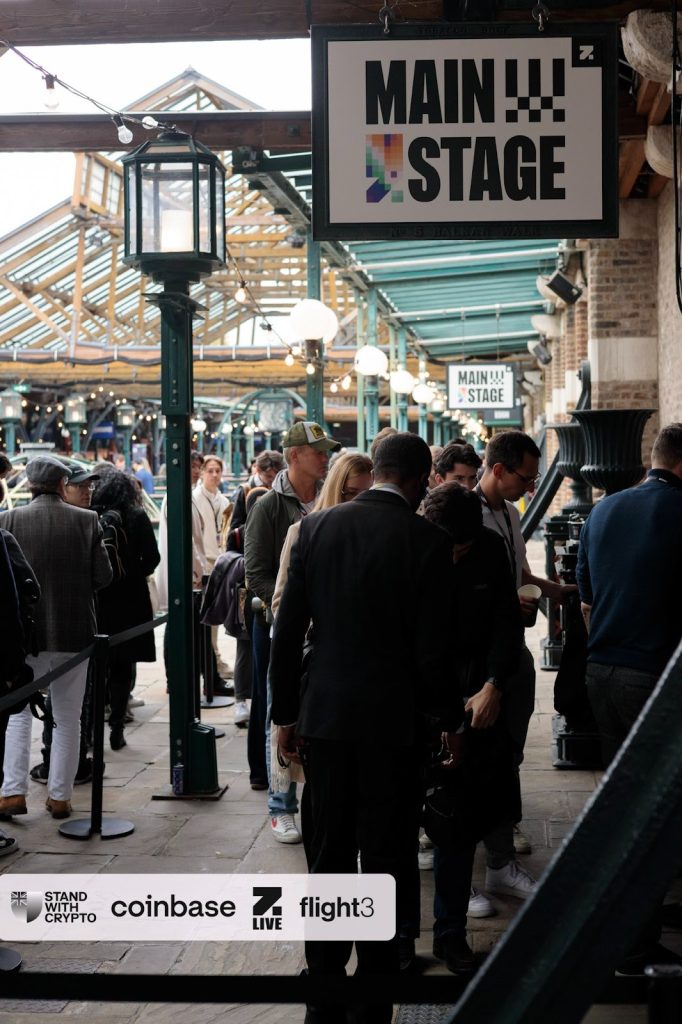
The impressive attendance of approximately 4500 individuals, coupled with the presence of major DeFi powerhouses such as Coinbase, Solana, Ripple, and Binance, solidified London’s burgeoning reputation as a global Web3 hub, even amidst the ongoing uncertainties surrounding regulatory scrutiny.
Institutional Sophistication: Bitcoin’s Role and the Quest for Sustainable Yield
The “Bitcoin’s Double-Edged Sword” panel offered insightful discussions on Digital Asset Treasuries (DAT’s), touching upon the increasing sophistication of institutional engagement with crypto. Rajiv Nandwani (Binance) astutely observed the evolution: “crypto is becoming an institutional asset class… These volatility factories are going to become more structured asset managers… generating yield sustainably.” He further noted that even a modest corporate adoption (e.g., 3% of US corporate treasuries allocating to BTC) would not yet dominate the market capitalization, suggesting substantial headroom for growth. However, this growth necessitates sophisticated, sustainable yield generation strategies, moving beyond simple HODLing.
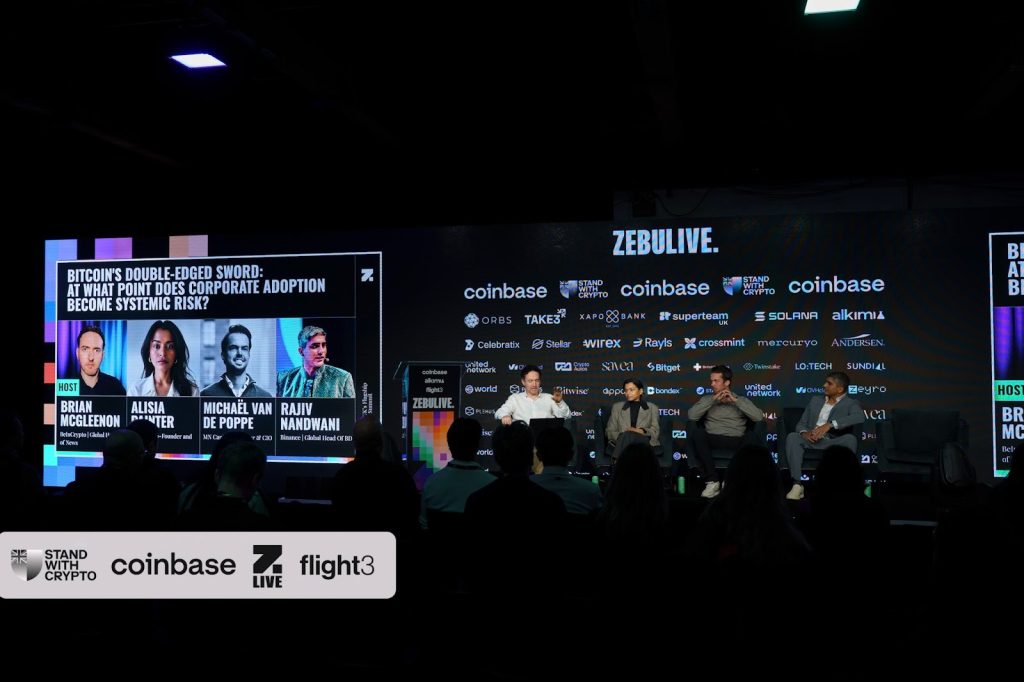
Michael Gord (GDA/MN Capital) introduced a counterpoint, expressing concerns about excessive leverage: “we have all the debts that are actually issuing debt to create to buy more of a crypto that is the buildup of the bubble.” This highlights a critical institutional need for safer, yield-bearing RWA infrastructure, rather than engaging in purely leveraged plays.
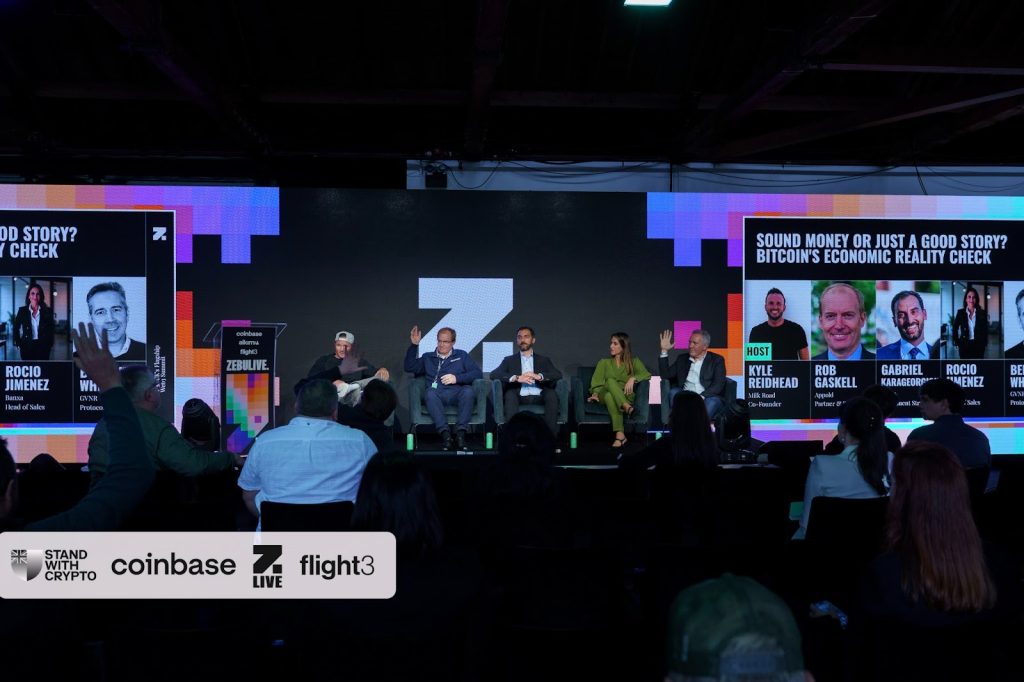
The “Sound Money” panel delved into Bitcoin’s established dominance as a store of value, akin to digital gold. Benjamin Whitby (Governor) articulated the core issue: “who wants to spend their Bitcoin, right? That’s… why Bitcoin’s gravitated towards store value.” He acknowledged its lower correlation with traditional financial assets compared to other cryptocurrencies, a characteristic that enhances its attractiveness for portfolio diversification. Whitby argued that the path forward lies in utilizing BTC as collateral: “We’ve got to find a way of making sure that we can extract all of the value… from the 2.2 trillion dollars of Bitcoin… into some kind of stable coins.” Rocio Jimenez (Banksa) provided real-world examples, noting that “Mercedes in Spain… you can buy a Mercedes with Bitcoin… a Saudi family \[bought a villa for\] 52 million… with Bitcoin.” However, she emphasized that stablecoins dominate daily and smaller payments, reinforcing Bitcoin’s primary role as collateral or for large-value transfers. The use of BTC to borrow stablecoins via DeFi protocols was highlighted as a key institutional use case, enabling holders to gain liquidity without divesting their underlying Bitcoin. Increasing on-chain transaction volume through these Layer 2 (L2) and DeFi applications was also deemed crucial for Bitcoin’s long-term security model as block rewards diminish.
Quantitative Validation: Bitwise’s Compelling Case for Digital Assets
Further reinforcing the institutional case for digital assets, Bradley Duke’s keynote from Bitwise offered a compelling quantitative perspective. He firmly positioned Bitcoin as a potent hedge against currency debasement, noting that its structural demand is now significantly driven by “corporate treasuries and ETFs,” which collectively consume “seven and a half times the \[new Bitcoin\] supply.” While acknowledging Gold’s recent outperformance due to its established adoption, Duke presented Bitcoin as a “coiled spring,” fundamentally undervalued relative to monetary expansion.
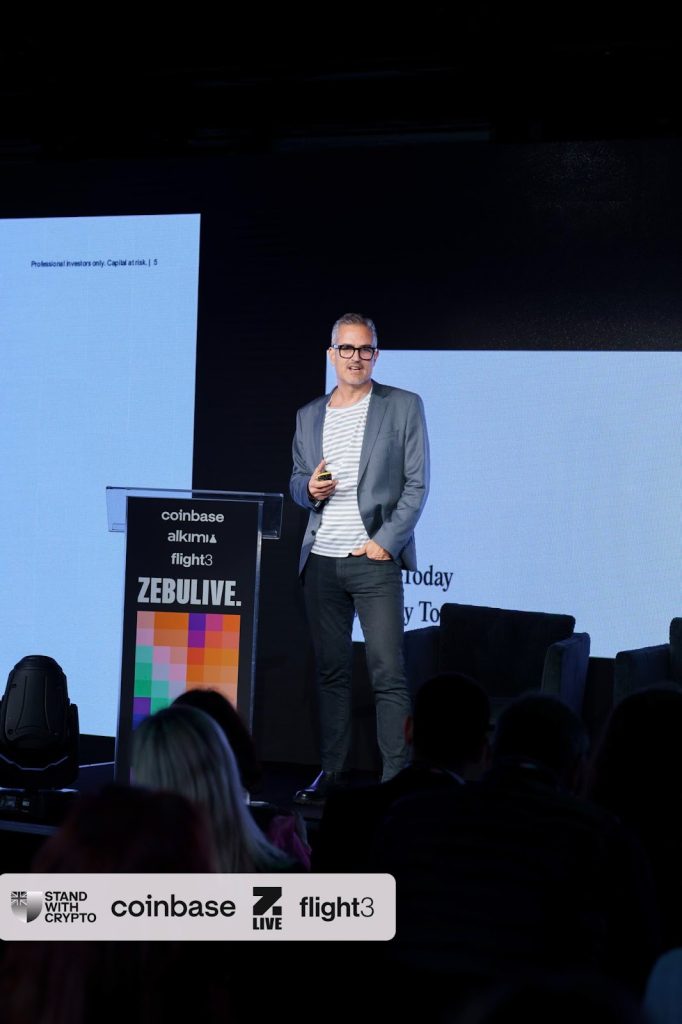
Duke contrasted this with Ethereum, framing it as a high-growth “tech story” rapidly gaining traction, having “surpassed 10 billion in revenues in seven years… better performance than all the biggest tech companies.” Critically for institutions, he demonstrated that adding even a small 1-5% allocation of BTC or ETH to traditional portfolios “greatly improves the performance… \[and\] the risk adjusted performance (Sharpe Ratio) increases considerably,” while “the max draw down… only moves from 15% to 16.4%.” This data robustly supports the argument that digital assets offer significant diversification benefits without unduly increasing overall portfolio risk, making their inclusion a rational decision for institutions seeking optimized returns.
The “How” of Web3 Adoption: Policy, Regulation, and the UK’s Path Forward
Day 2 emphatically shifted focus to the “how” of Web3 adoption, with policy and regulation emerging as the dominant theme across high-profile sessions such as “Code vs Law,” Nigel Farage’s keynote, and “Decentralized Finance Regulatory Maturity.” Discussions centered on the UK’s trajectory, emphasizing the urgent need for regulatory clarity and contrasting perceived UK caution with the accelerating pace in the US (driven by the Genius Act) and hubs like Singapore or Dubai.
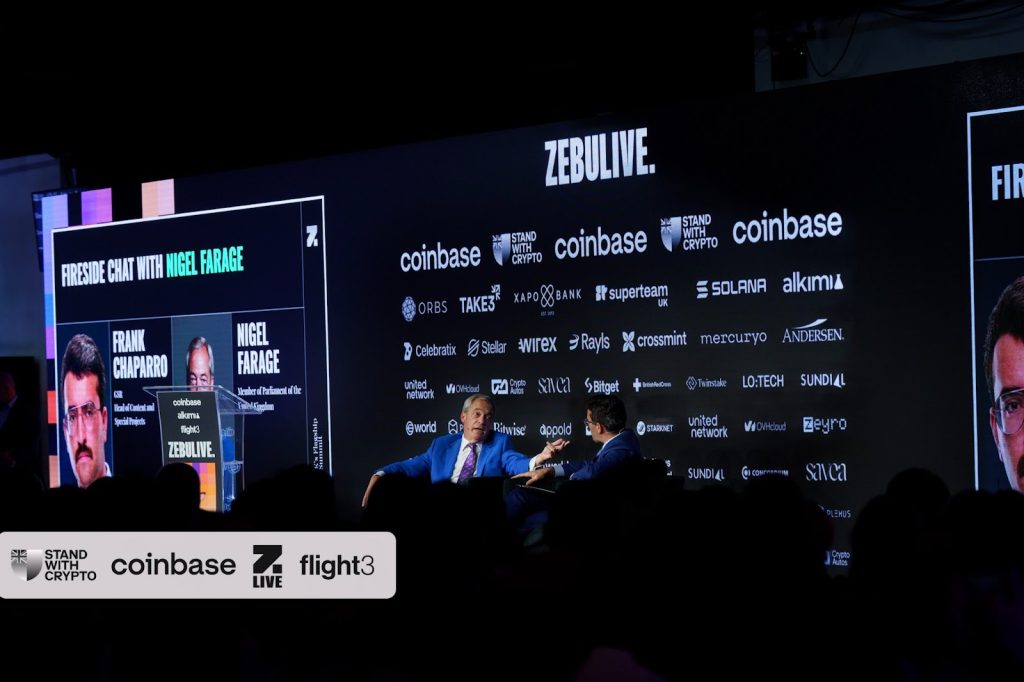
Nigel Farage was particularly critical, arguing that UK regulators and politicians are out of touch and risk stifling innovation. He passionately advocated for crypto as “the ultimate freedom in the 21st century” against potential state overreach like CBDCs (which he strongly opposes) and de-banking. He urged a “Big Bang 2.0” to establish London as a global leader: “we can become a world leader and a center for this industry.” This call for action resonated deeply with the industry’s proactive stance, exemplified by the Coinbase-led “Stand With Crypto” rally advocating for engagement.
Further insights came from the “Regulatory Maturity” panel, where Temujin Louie noted a positive shift, stating that regulators “are being more proactive… the value of DeFi… has caught the attention of TradFi.” Echoing the need for clarity suitable for institutions, Rupert Poland added that leading jurisdictions focus on activity-based rules, observing, “The leaders are really doing it on activity based and then aligning that with existing regulation.” The overarching consensus across these discussions was unequivocal: clear, sensible rules, moving beyond prolonged consultation to concrete frameworks, are now considered an absolute necessity for enabling large-scale institutional adoption.
Bridging the Divide: From Degen to Institutional DeFi
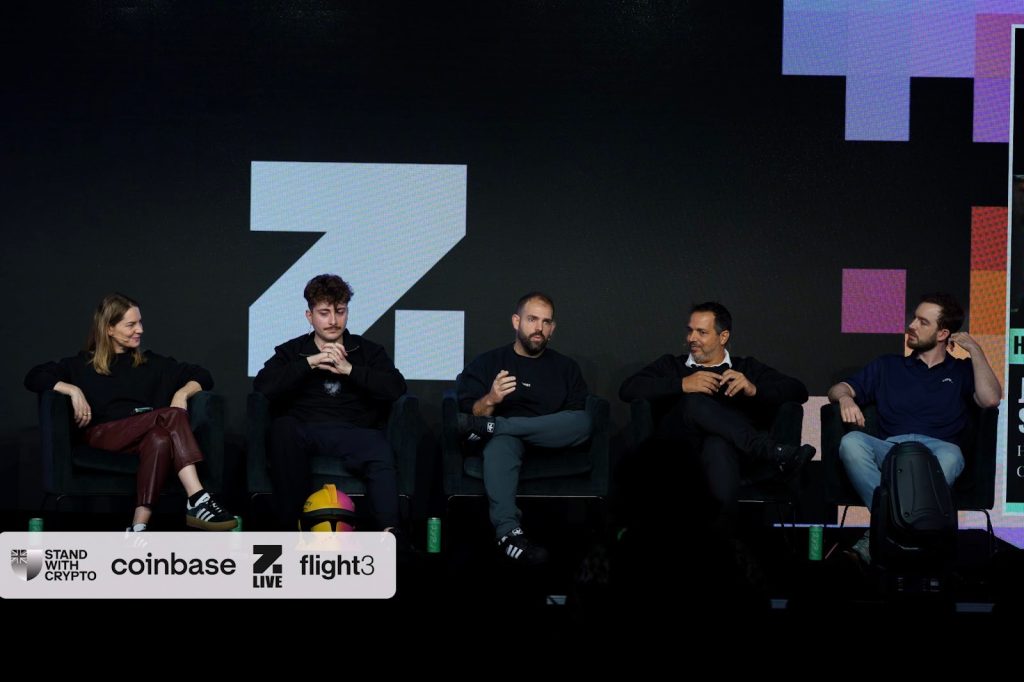
The “From Degen to Institutional” panel explicitly addressed the significant divide within the DeFi space, concluding that institutions will not directly engage with anonymous, high-risk ‘degen’ protocols due to fundamental compliance and counterparty risks. As Angus Tookey (Kio/Sky) highlighted, institutions demand specific, reliable features often absent in purely ‘degen’ DeFi, requiring “stable rates like stable borrowing and lending rates, no spiking… deep liquidity… clear standard things.”
However, the panel recognized that institutions are attracted to the inherent technological efficiencies DeFi offers, such as T+0 settlement, automation, and enhanced capital efficiency. This institutional interest, as Ran Hammer (Orbs) noted, is consequently raising the bar for the entire ecosystem: “the standard for the industry has risen quite a lot because of all the new institutional money that came in… the level of performance… stability and consistency required… is much higher.” The discussion framed the ‘degen’ space as the crucial “R&D lab” for rapid innovation, while describing institutional platforms as the necessary “factory” – rebuilding and refining proven DeFi concepts within a compliant, robust, and risk-managed wrapper suitable for regulated entities. While acknowledging the separation, the need to bridge these worlds was also emphasized, potentially aligning with Stanislaw Koper’s sentiment that “It always comes down to how do we merge both institutions and degens together to ensure that we pave the correct way forward.“
Crucially, the panel underscored that institutions are primarily seeking sustainable, real-world yield (like from RWAs), not the hyper-volatile rewards typical of early yield farming. This entire dynamic precisely defines VOLS’s value proposition: VOLS acts as the institutional “factory,” taking proven DeFi concepts like Central Limit Order Books (CLOBs) and sophisticated yield strategies, and implementing them with the institutional-grade execution, security, embedded compliance features, and robust risk management that banks and other traditional financial institutions require before deploying significant capital on-chain.
Key Takeaways and Future Direction for VOLS
Zebu Live 2025 provided strong validation for VOLS’s core strategy and market positioning. The clear shift towards institutional adoption, coupled with the explicit demand for compliant, efficient, and risk-managed DeFi infrastructure, unequivocally confirms the significant market opportunity for our platform.
Key takeaways for VOLS include:
- Tokenization Maturation: The growing maturity of tokenization, particularly with Real World Assets (RWAs), creates immediate demand for VOLS’s CLOB and Insurance Layer, positioning us at the forefront of this evolving sector.
- Bitcoin as Institutional Collateral: Bitcoin’s established role as institutional collateral necessitates safe, on-chain venues like VOLS for sustainable yield generation and borrowing, highlighting a critical market need we are uniquely poised to address.
- The “Degen vs. Institutional” Framework: This paradigm perfectly positions VOLS as the essential “factory” that provides the secure, compliant wrapper institutions require to confidently engage with DeFi.
- Regulatory Clarity as an Enabler: The increasing imperative for regulatory clarity reinforces the inherent value of VOLS’s compliance-focused approach, ensuring our platform is built for the future of institutional finance.
In summary, the conference underscored that the market is actively seeking the precise solutions VOLS is building. This validates our current product roadmap and strongly urges prioritized engagement with the RWA ecosystem, coupled with a continued, unwavering focus on meeting stringent institutional requirements.